
Centennial Journal
October 22, 2026

Bolinas Museum unveils Paul Harris: The Boy Sews Like An Angel
Largest survey of the artist in more than 25 years reunites nearly 40 objects made in Bolinas by the adventurous postmodernist
A forum on the artist at California College of the Arts extends the show into San Francisco
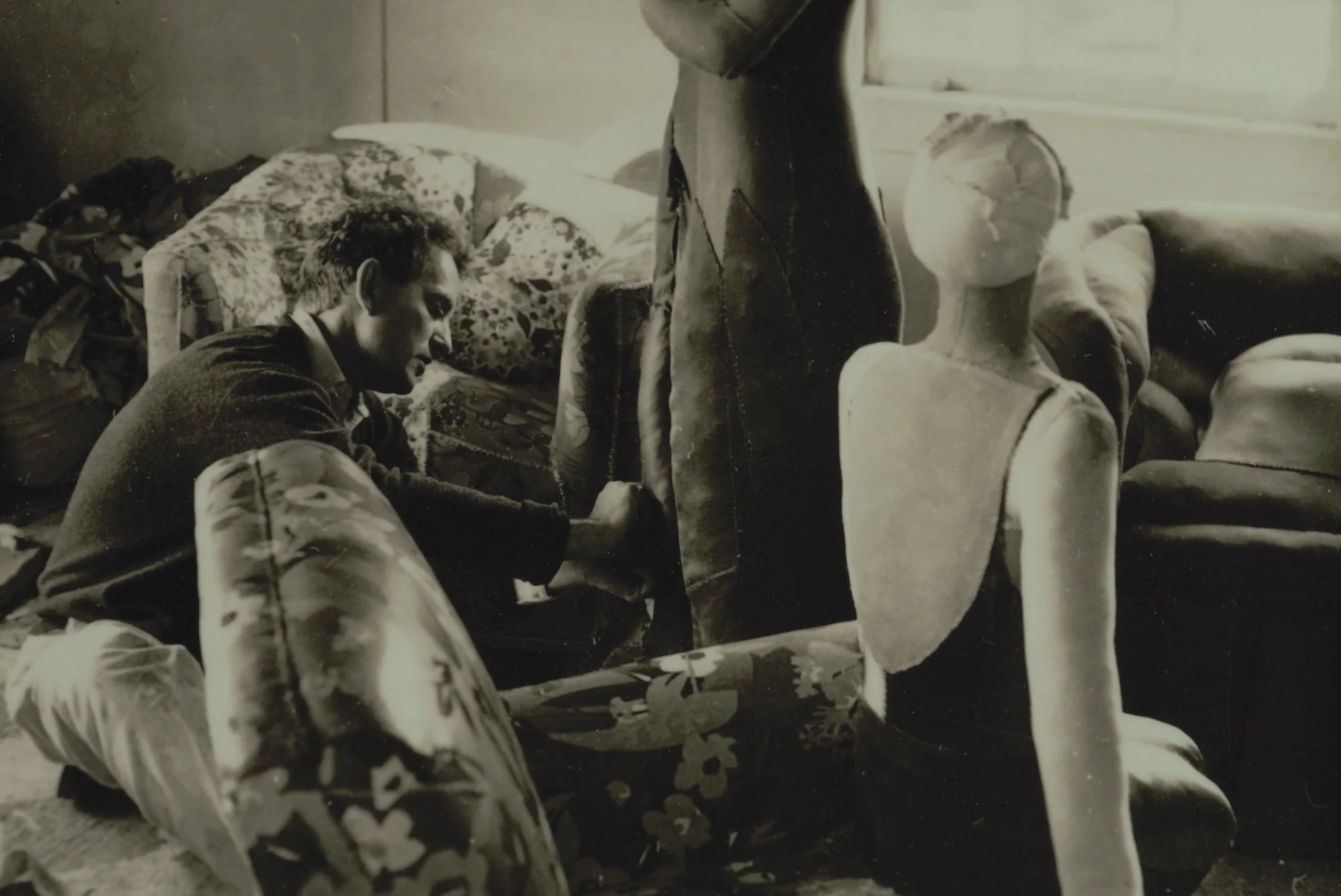
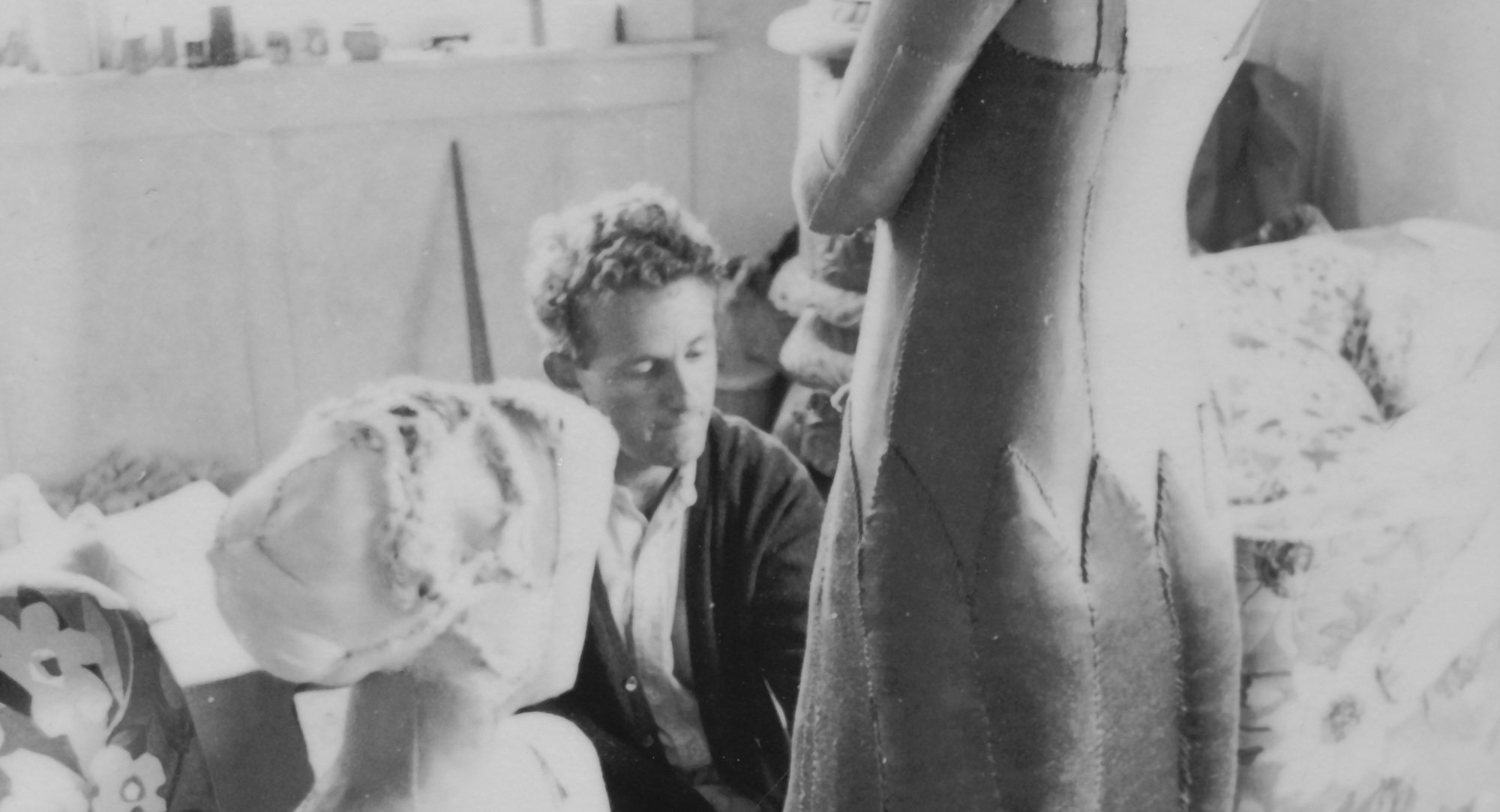
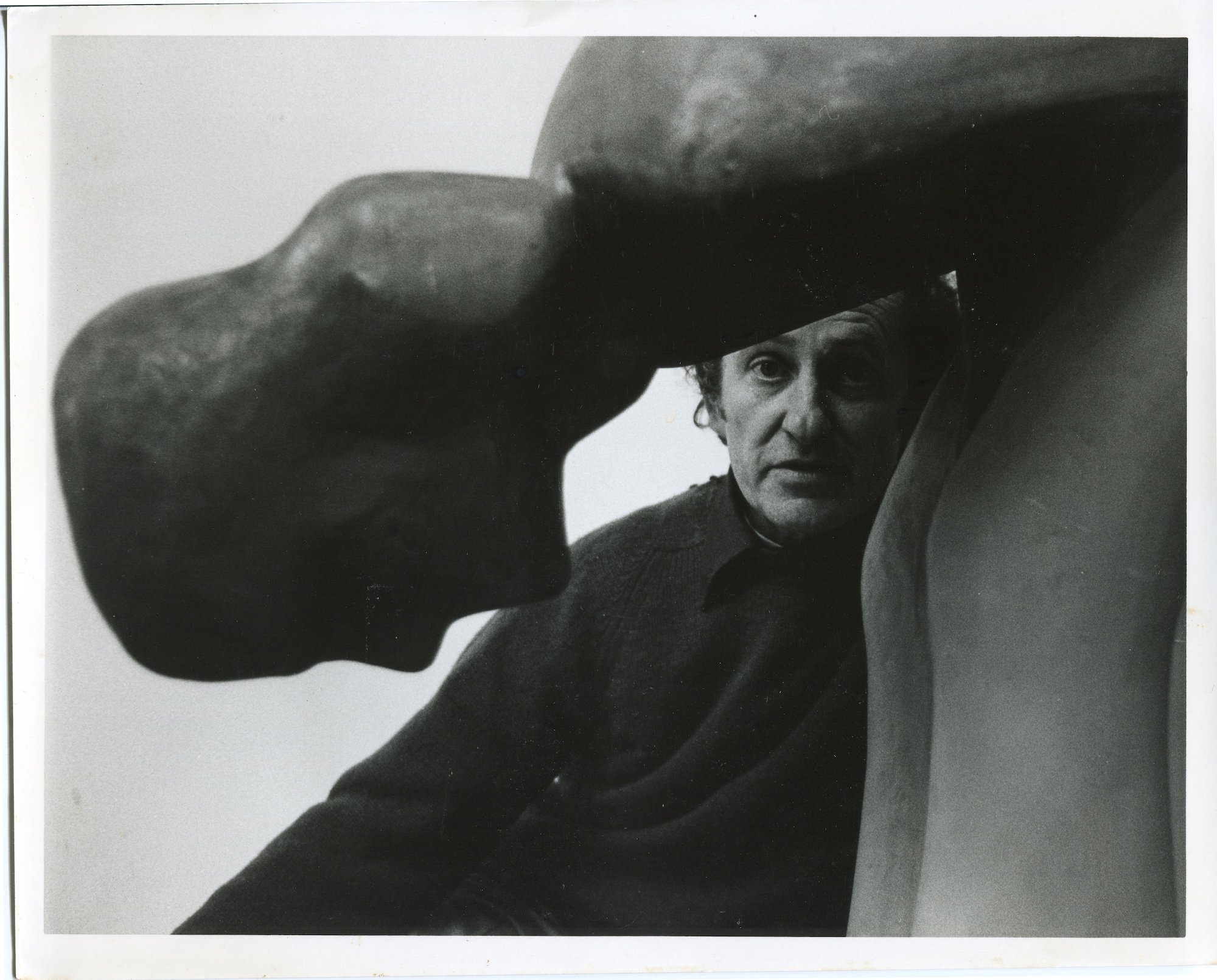
Paul Harris sewing in his studio at 105 Wharf Road, Bolinas, CA, c. 1964–65
Bolinas, California—Bolinas Museum will unveil Paul Harris: The Boy Sews Like An Angel, a survey of the restless, experimental postmodernist and Bolinas resident, on Saturday, October 31, 2026 with an opening reception at 12:00 p.m. and courtyard remarks at 1:00 p.m. A wide ranging presentation rich in mediums, materials, and styles, nearly 40 works in pencil, crayon, papier-mâché, fabric, bronze, and lithography have been reunited for the first time in 25 years alongside rarely seen archival and studio material that spill across the museum’s historic buildings and into its outdoor courtyards, steps from where the artist worked in his lifetime. Organized with the Paul Harris Estate, and unfolding six decades of the artist’s adventurous practice, the exhibition includes special loans from California institutions of his rarely seen, vivaciously colored stuffed fabric and cloth sculpture series begun shortly after the artist and his family moved to Bolinas in 1963. The exhibition is curated by Bolinas Museum Executive Director Jessica Shaefer, whose essay “The Patina of Place: Paul Harris in Bolinas” in the show’s accompanying exhibition catalogue explores how the coastal town, long “a refuge for creatives,” provided Harris with the independence to make his reputation as an artist on the vanguard of the soft sculpture movement in the 1960s and 1970s. The exhibition takes place during a revival of interest in the artist and culminates a year-long centennial celebration, #PaulHarris100.
“Paul Harris had an extraordinary ability to find endless creative possibilities in the most ordinary materials, transforming the familiar into something surprising, playful, and deeply human. Bringing his work together here in Bolinas, just steps from where so much of it was created, offers a rare opportunity to celebrate both his remarkable artistic legacy and the profound influence of this place on his practice,” said Jessica Shaefer, Executive Director of Bolinas Museum.
The museum is delighted to announce that the retrospective now extends into San Francisco at California College of the Arts, where the artist was an instructor in the sculpture department from 1968 to 1992, beloved for his radical, playful work and pedagogy, and who typified the college’s ethos of working across disciplines and in mediums associated with the college’s history, including sculpture, textiles, printmaking, painting and drawing, and writing. On Wednesday, December 2 at 7:00 p.m., the college will dedicate a special evening to Paul Harris as part of an ongoing series that explores the college’s transformative legacy as it approaches the close of its final academic year. Following a keynote by Shaefer—and a screening of never-before-shown, newly digitized c. 1970s footage of Harris’s experimental Sculpture Theater class—writer, critic, and curator Glen Helfand will moderate a special conversation with Bay Area alumni of the college. Artists working in similar mediums will consider Harris's multidisciplinary, experimental studio practice, including Diedrick Brackens, best known for his woven tapestries that explore allegory and narrative through his own autobiography, books, poems, and legends, broader themes of African American and queer identity, and American history; and Sarah Hotchkiss, an artist and arts writer who makes abstract geometric paintings that often reference found graphics like board games, puzzles, mazes, and curious everyday objects.
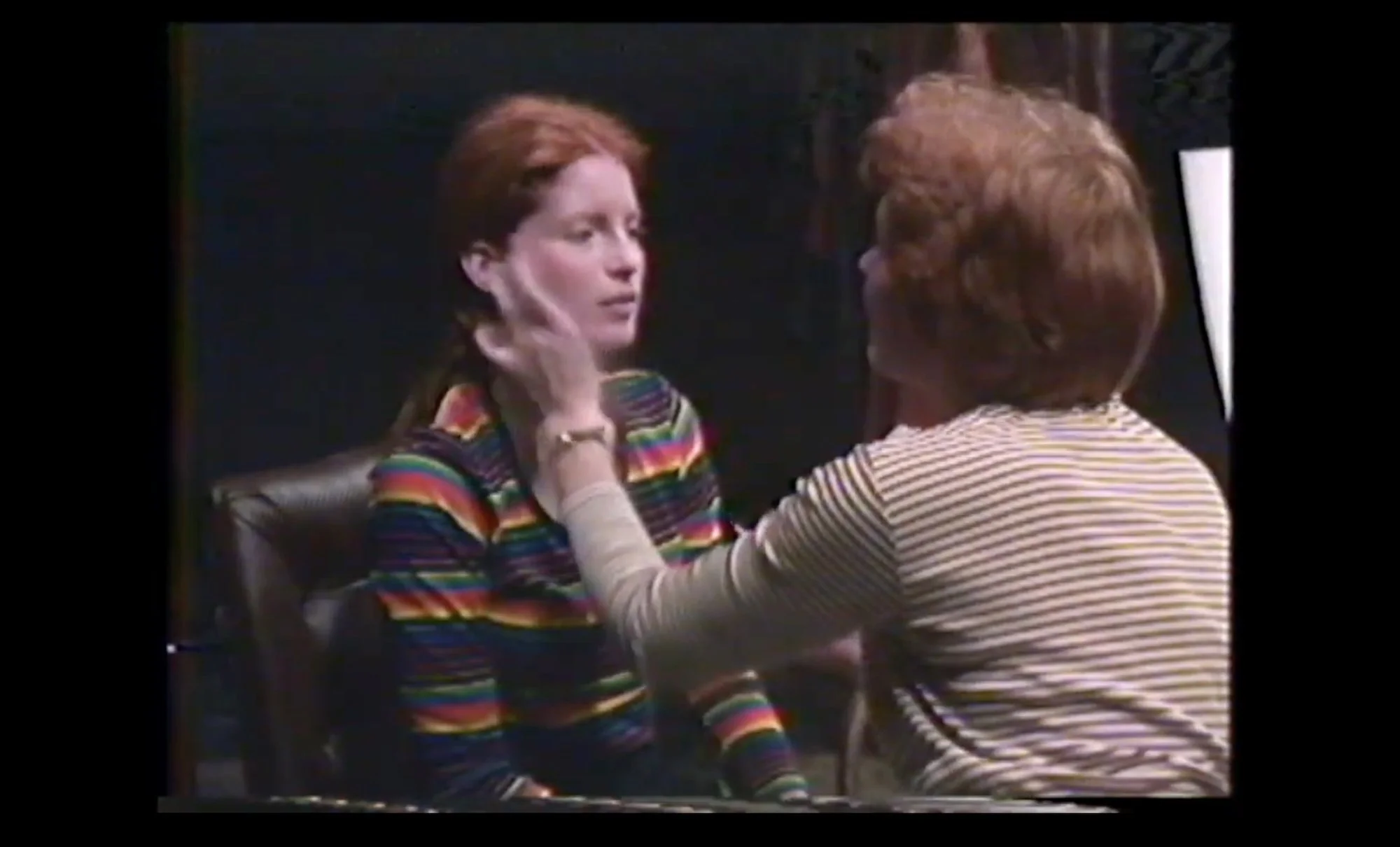
A rare still of the artist’s course at California College of the Arts, Sculpture Theater, c. 1970s
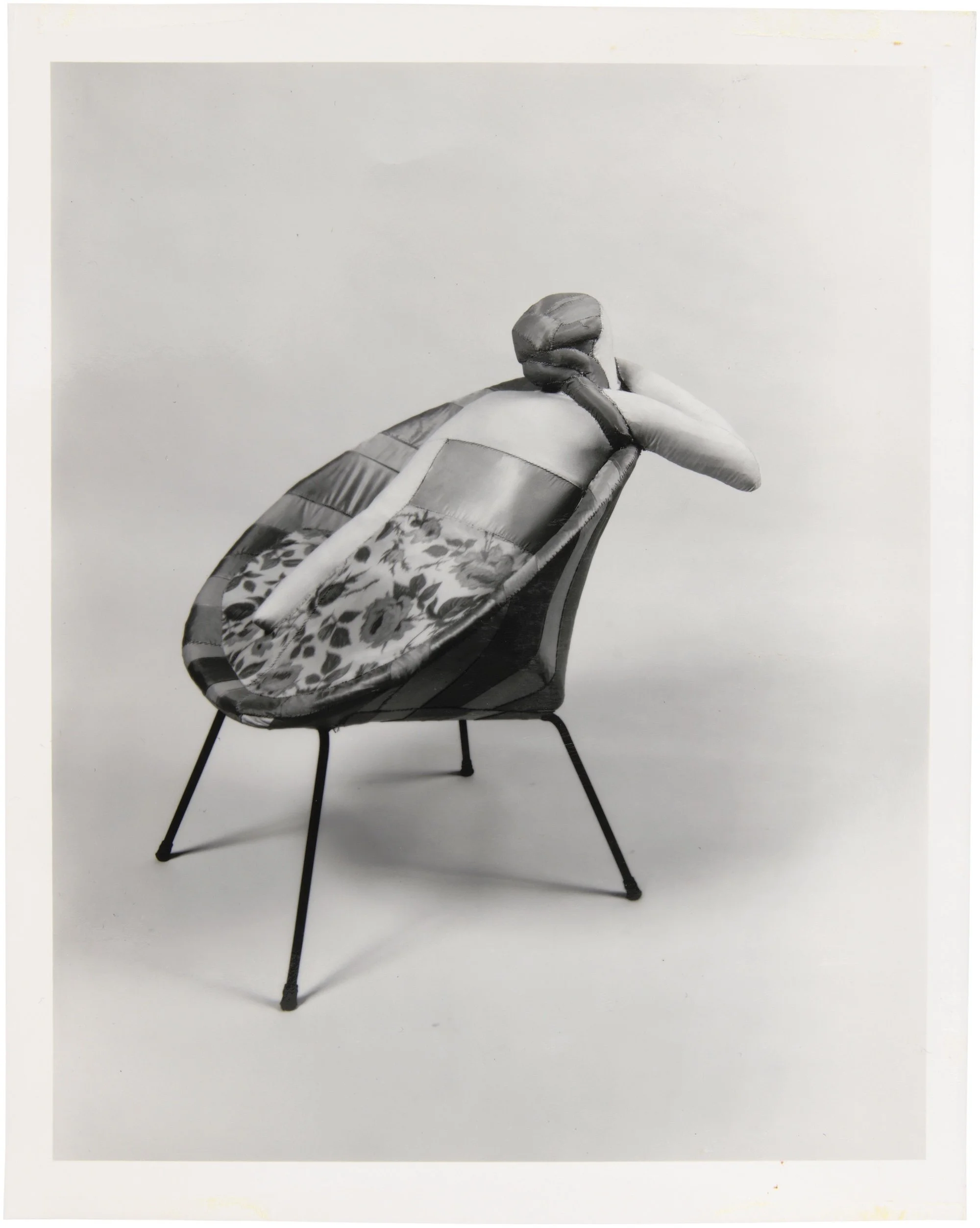
At the museum, the exhibition includes examples of rarely exhibited highly experimental work made steps away in the artist’s former studio. An early, vividly colored stuffed fabric and cloth sculpture, Woman Looking Out to Sea (1964–65) is on loan exclusively from the Berkeley Art Museum and Pacific Film Archive. “I couldn’t afford bronze, and I don’t think I had the physical structure for working in stone,” he told an interviewer during his lifetime. Shaefer, writing in the exhibition catalogue, asserts that “many of Harris’s sewn figures incorporate chairs or other forms of seating, blurring the boundaries between furniture, body, and sculpture” and that the work’s “seated figure’s twisted torso and absence of legs or a face invite an immediate, visceral response.” While the cloth on metal Woman Giving Her Greeting (1964)—a “hand-sewn robe, opened and askew to reveal one exposed breast, palms raised theatrically in what could be surprised delight, magnanimous welcome, or fearful defense,” Shaefer writes—is on loan from the Fresno Art Museum. Both works were included in a solo exhibition from December 20, 1966 to January 14, 1967 at the legendary Poindexter Gallery in New York City. In the March 1967 issue of Artforum, Robert Pincus-Witten remarked, “Paul Harris, in these large stitched and stuffed dolls … displays an accomplished sense of planar simplification and supple, surface modulation … The boy sews like an angel.”
Woman Looking Out to Sea, 1964–65, stuffed cloth on metal chair frame, 43 x 26 x 31 inches, University of California, Berkeley Art Museum and Pacific Film Archive, CA; Gift of Christopher and Nicholas Harris
Woman Bending Over, 1978, bronze and paint, 41 x 29 x 16 inches
A restless and versatile innovator, Harris turned to bronze in the 1960s. The exhibition includes his first work in the medium, the seven-foot-tall Standing Man (1960), and Woman Bending Over (1978), which Jessica Holmes, former deputy director of the Calder Foundation, argues in the exhibition catalogue—a special reprint of a commission for #PaulHarris100 by the Paul Harris Estate—is striking for its “cartoonish proportions of the swell and scale of Harris’s fabric sculptures of women,” and that “her head and torso are in disproportion to her long legs, which end in oversized feet that help counter instability.” Many of Harris’s bronzes were conceived of and installed in the landscape around the artist’s Bolinas home and studio that he built at 200 Ocean Parkway, where Shaefer notes, “traces of wax still mark the studio floor—evidence of the making that happened there and of the works’ deep connection to place.” Works such as the surrealist, disembodied 1986 Puella or the sensual, corporeal 1989 Anna Turning suggest the artist’s delight and reverence for the material and his ability to inject it with a striking immediacy and intensity.
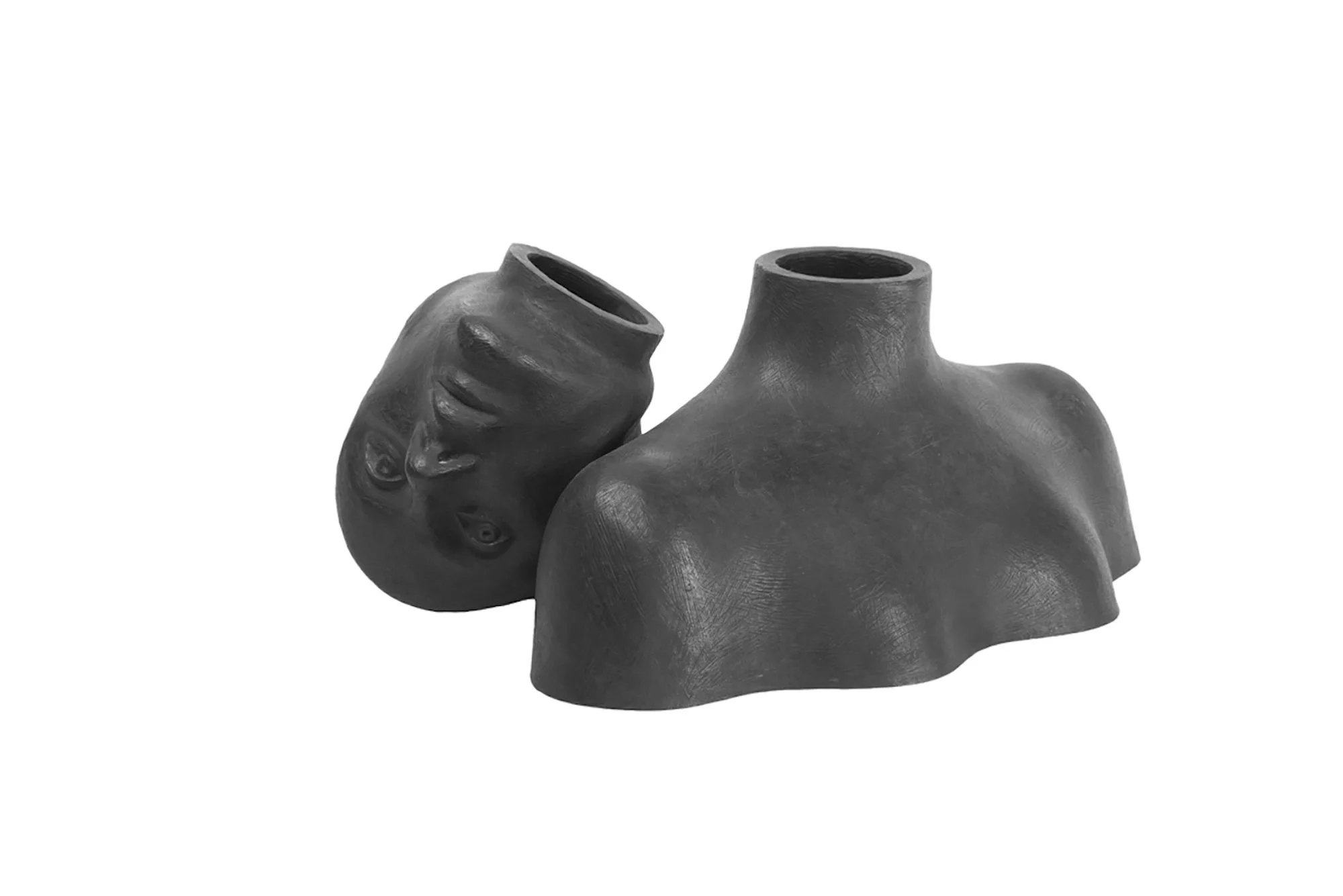
Puella, 1986 bronze, 10 x 17 x 20 inches
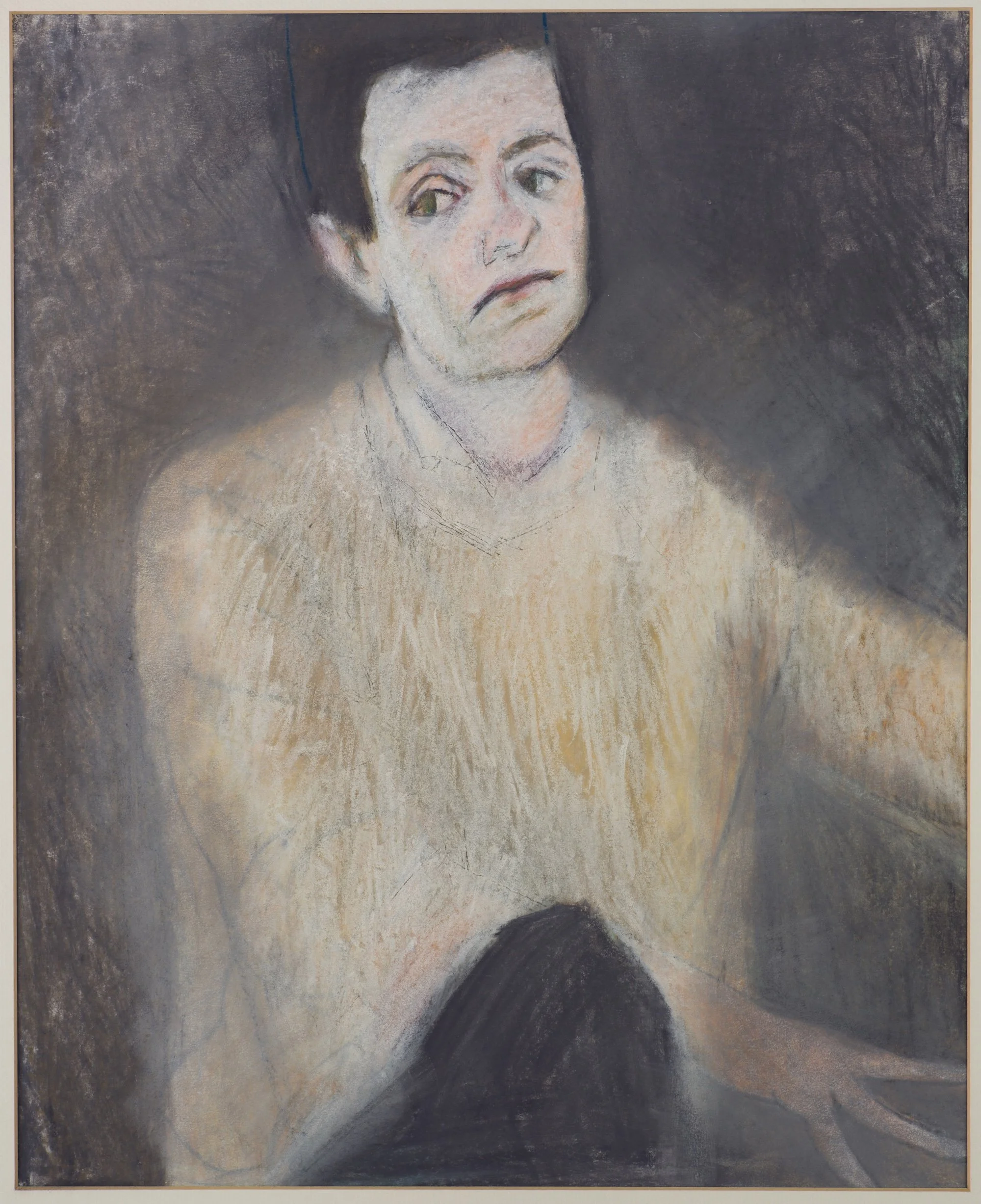
Self Portrait, 1956, pastel on paper, 16 ½ x 13 ½ inches
The exhibition includes an activated and jagged pencil on paper collage during a period when the artist and his wife moved their family to Jamaica to escape McCarthyism. Nearby, a glowing, vertical 1956 pastel on paper self portrait made the same year the artist began working as an editorial associate for ARTnews alongside fellow reviewers painter Fairfield Porter (1907–1975) and writer and poet Frank O’Hara (1926–1966). The sheet is remarkable for its bright, dazzling slashes and strokes atop a deep, dimensional jet-black ground and an off-kilter hand missing a finger and thumb. Other sheets, with built-up color and surfaces, depict Bolinas itself, such as The Way Down to The Sea (1983) and Shells in Grey Bowl I (1999).
About the Artist
Paul Harris (1925–2018) continues to evade definition materially, thematically, and aesthetically. Trained as a painter, he worked in oil, pencil, crayon, pastel, lithography, fabric, fiber, wood, and bronze. Harris received his M.A. in Painting and Sculpture at the University of New Mexico in 1951. As an undergraduate student, his classmates included Agnes Martin (1912–2004) and Richard Diebenkorn (1922–1993), who eventually became “perhaps his closest friend.” He was a recipient of a Tamarind Lithography Workshop Fellowship (1969), a Guggenheim Fellowship (1979), and a MacDowell Fellowship (1977). “A postmodernist,” argues curator Leah Triplett in a specially commissioned #PaulHarris100 essay, “who wove wit, playfulness, and illusion into his work … [he] was among a vanguard of artists across the U.S. manipulating fabric, string, and batting.” After early experiments in pencil, string, and papier-mâché, the latter resulting in his inclusion in a show of new sculpture at the Museum of Modern Art in New York in 1959 alongside John Chamberlain (1927–2011) and David Smith (1906–1965), Harris made his reputation with highly experimental fabric and cloth works that he sewed and stuffed in Bolinas in the 1960s and 1970s. He was soon included in groundbreaking sculpture exhibitions at the American Craftsmen’s Council’s Museum of Contemporary Crafts in New York in 1966 (now the Museum of Arts and Design) and the Los Angeles County Museum of Art (LACMA) in 1967. This was followed by well-received solo exhibitions at the San Francisco Museum of Art (now the San Francisco Museum of Modern Art) in 1972 and the Stanford University Museum of Art (now the Cantor Arts Center) in Palo Alto, California in 1982. A socially and politically progressive human being, Harris taught for nearly 25 years at California College of Arts and Crafts (now California College of the Arts) in Oakland on the recommendation of his close friend Diebenkorn. The artist and his wife Marguerite “Meme” Harris’s influence also extended into the civic life of the town. A teacher, organizer, and environmental advocate, Meme led a 1971 moratorium on new water permits that had a profound effect on the local community and became a national model for other communities facing development pressures. Her efforts were later chronicled by former New Yorker contributor and Bolinas resident Orville Schell in The Town That Fought to Save Itself (Pantheon, 1976).
“Our work is possible because of the foresight and wisdom of Marguerite ‘Meme’ Kirk Harris (1929–2023), who sought to preserve and protect the town she loved so dearly, and who devoted herself to advancing Paul Harris’s artistic legacy following his death,” said Rich Kalin of the Paul Harris Estate in Bozeman, Montana. “I would like to personally thank and acknowledge Christopher and Nicholas Harris for their involvement and contributions.”
Exhibition Catalogue
The exhibition is accompanied by a new, fully illustrated catalogue edited and designed by Portrait. The publication includes new scholarship by Shaefer that explores how the artist’s move to Bolinas, “arrived at a pivotal moment, when an already adventurous practice
was moving toward the expression of one of its most distinctive forms.” Shaefer traces Harris’s experiments beginning in 1961 with “materials that were readily available and easily transportable,” such as papier-mâché and string, to the moment, steps from the Bolinas Museum in 1964, when he began sewing and stuffing fabric figures using found materials and suddenly found himself on the vanguard of 20th century sculpture. She also explores the variety of disciplines on display in the show, such as pastels, lithographs, and bronze; his adventurous pedagogy at California College of the Arts, and how “Bolinas was not just the setting for Harris’s art; its landscape and daily life became part of what he observed and transformed.” The catalogue includes texts commissioned by the Paul Harris Estate on the occasion of #PaulHarris100 and special to the catalogue: a biography of the artist by Leah Triplett, Curator of Contemporary Art at the Pennsylvania Academy of Art and a specialist in soft sculpture; and an essay on the artist’s work in bronze by Jessica Holmes, former deputy director of the Calder Foundation. The catalogue includes a complete checklist and rarely seen archival, including a never-before-published c. 1966 photograph of the artist’s fabric and cloth process using a model.
Public Programming
Opening Reception, Bolinas Museum
October 31, 2026, 12:00 p.m. / Courtyard Remarks 1:00 p.m.
Free and open to all
Public Program, California College of the Arts
December 2, 2026, 7:00 p.m.
Free and open to all
About Bolinas Museum
Founded in 1983, the Bolinas Museum is dedicated to exploring and celebrating the cultural heritage, artistic traditions, and creative spirit of the coastal Marin region of Northern California. Through exhibitions and public programs, the museum preserves and presents stories, objects, and artworks spanning regional historical narratives, historical art, and contemporary works by artists from the region and beyond. With free admission, multiple galleries, and a vibrant calendar of cultural events, the museum connects residents and visitors to the people, places, and creative expressions that have shaped the region's distinctive natural and cultural legacy. Learn more at www.bolinasmuseum.org.
About Paul Harris Estate
The Paul Harris Estate cultivates appreciation and understanding of the highly versatile postmodernist Paul Harris (1925–2018). The estate maintains six decades of Harris’s artwork in crayon, pencil, fiber, fabric, and bronze; a robust archive of papers, ephemera, and tools; and an ongoing, widely accessible digital initiative. The estate invites and supports research, symposia, exhibitions, and loans; and contributes to the history, and contemporary culture of art making, of Bolinas, CA where the artist lived and worked.
About #PaulHarris100
Paul Harris 100, #PaulHarris100, is a centennial celebration of the art and life of the restless, versatile postmodernist (1925–2018). Organized by the Paul Harris Estate, the centennial includes new research, scholarship, archival processing and photography, institutional collaborations, and a centennial microsite, paulharrisestate.com. The culmination of the centennial, Paul Harris: The Boy Sews Like An Angel, is a sprawling retrospective at Bolinas Museum in Bolinas, California where the artist lived and worked with his family from 1963 until his death in 2018. The exhibition includes special museum loans, new scholarship, and public programming with California College of the Arts in San Francisco. The centennial involves a host of institutions that have contributed rare material to the study and understanding of the artist, including the Archives of American Art, Smithsonian Institution, Los Angeles County Museum of Art, San Francisco Museum of Modern Art, and Stanford University. Visit the new @PaulHarrisEstate on Instagram for more.
Press Kit
Media Contacts
Asha McGee, Bolinas Museum
asha@bolinasmuseum.org
Brent Foster Jones or Katharine James, Portrait, for Paul Harris Estate
info@paulharrisestate.com
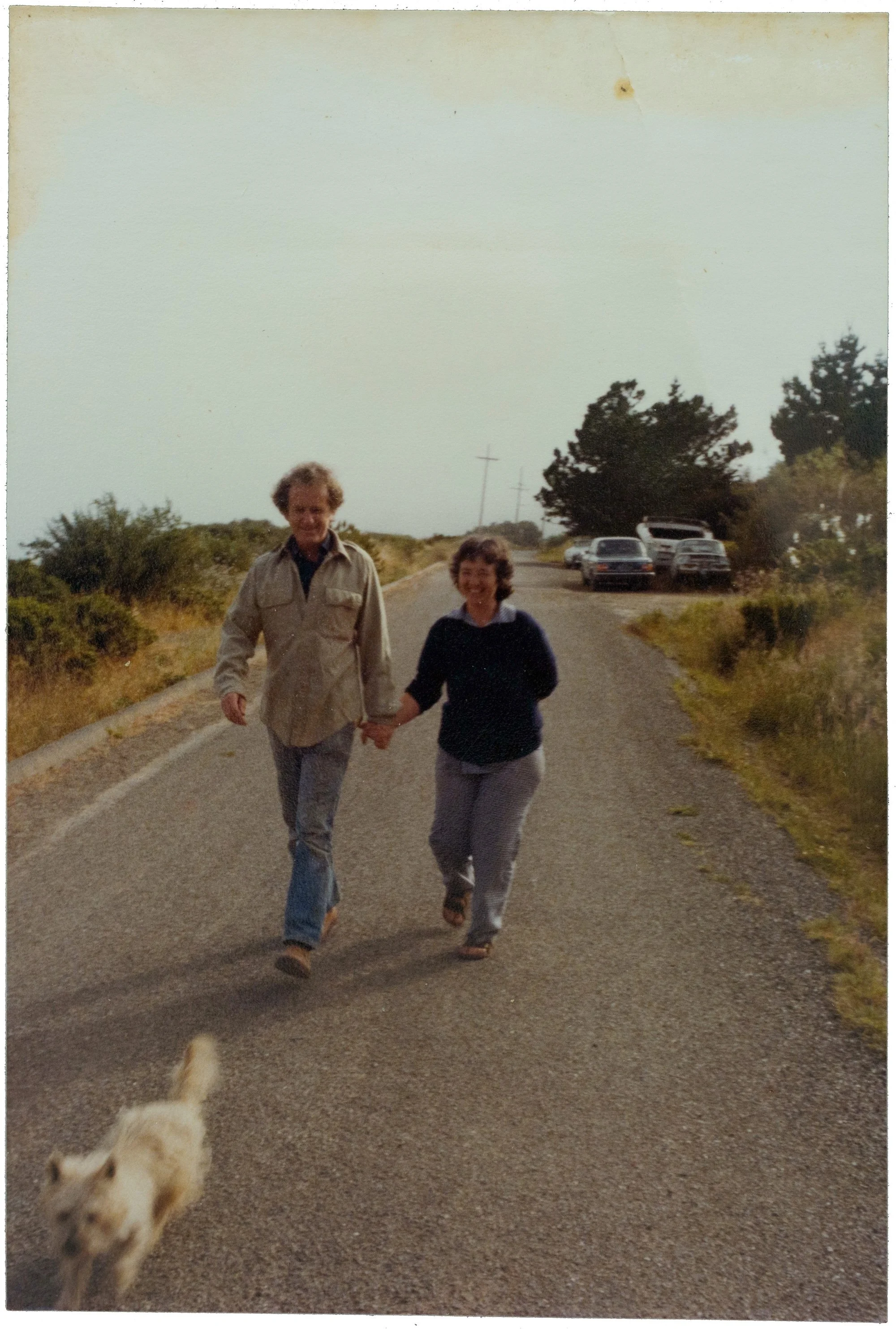
Paul and Marguerite Harris walking with their cairn terrier on Ocean Parkway, Bolinas, CA, c. 1985–90