
Centennial Journal
June 24, 2026

Bolinas Museum to open Paul Harris: The Boy Sews Like An Angel in October 2026
Over 40 works spans six decades of the postmodernist’s adventurous, multidisciplinary practice, including rarely seen archival material
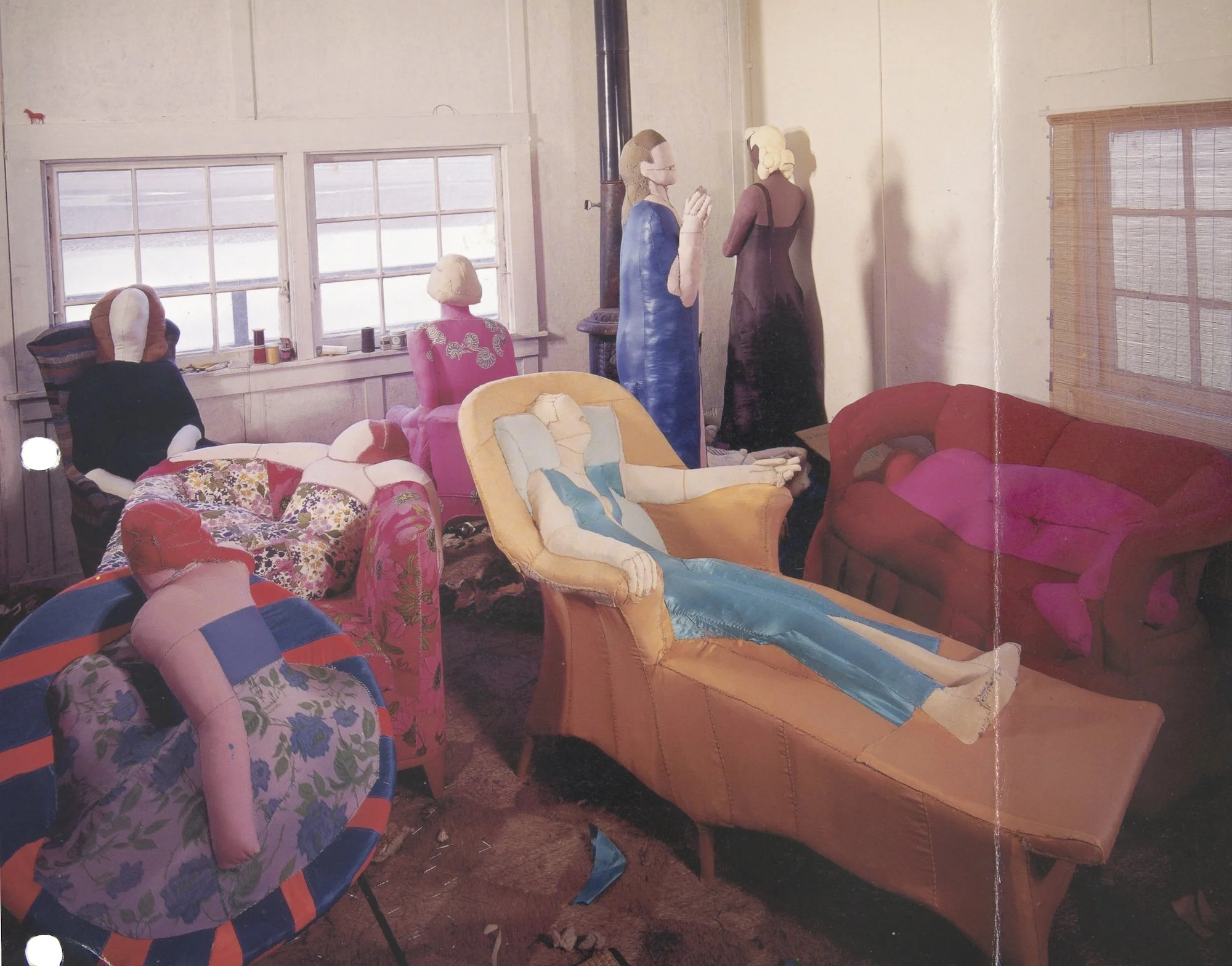
Photograph of Paul Harris’s fabric and cloth sculptures in the artist’s studio, Bolinas, Calif., undated, Paul Harris Archives
“The boy sews like an angel…”
—Robert Pincus-Witten, Artforum, 1967
Bolinas Museum recently announced Paul Harris: The Boy Sews Like An Angel, a wide ranging retrospective of work made by the late American artist and former resident of Bolinas, on view in the museum’s historic 1800s buildings and courtyard from October 31, 2026 to January 3, 2027. Organized with the Paul Harris Estate, the survey spans six decades of the postmodernist’s adventurous, multidisciplinary practice, from the 1950s to the late 2000s, and includes nearly 40 works in fabric, bronze, papier-mâché, wood, crayon, pencil, and lithography, the majority of which were produced in the artist’s studio in Bolinas, steps from the museum. Taking place on the occasion of the artist’s centennial, this is the largest survey of Harris’s work in more than 25 years and includes special loans, such as an early example of his vivaciously colored stuffed fabric and cloth sculptures series begun shortly after the artist and his family moved to Bolinas in 1963, historical photography of the artist at work at Bolinas, and a rare vitrine presentation of the artist’s tools and sketches. The show will be accompanied by a fully illustrated catalogue with scholarship by Bolinas Museum Executive Director Jessica Shaefer and public programming celebrating the artist’s life and contributions to the history of Bolinas and to 20th century art.
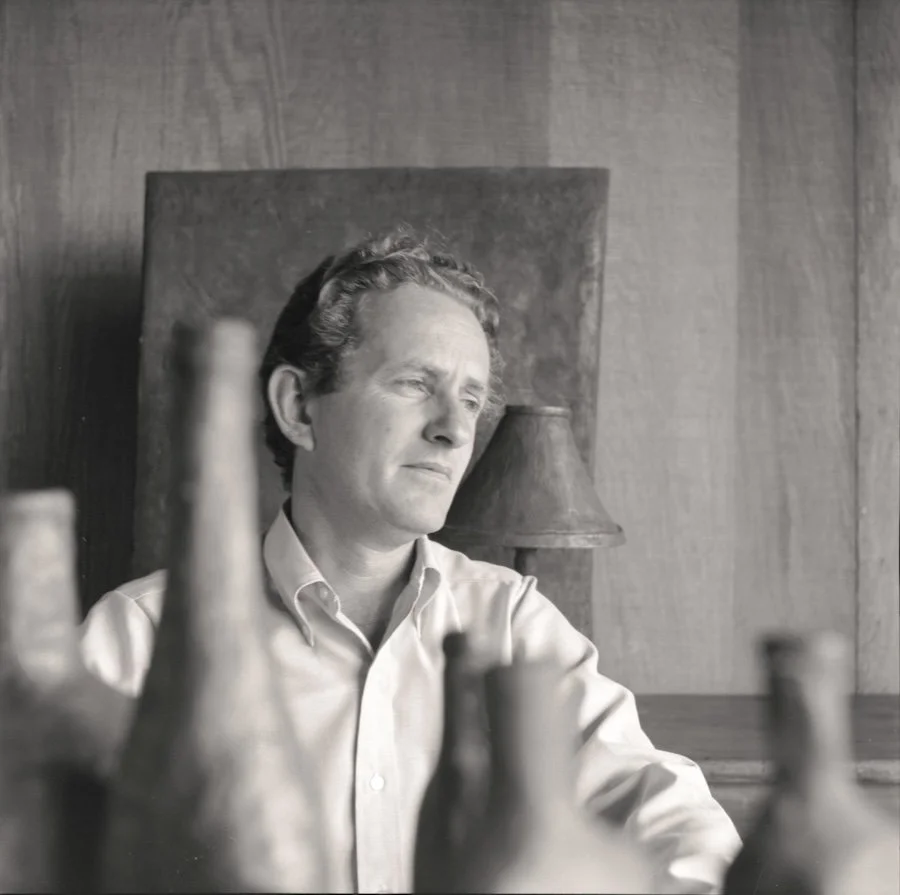
Photograph of Paul Harris in his home, Bolinas, Calif., undated, Paul Harris Archives
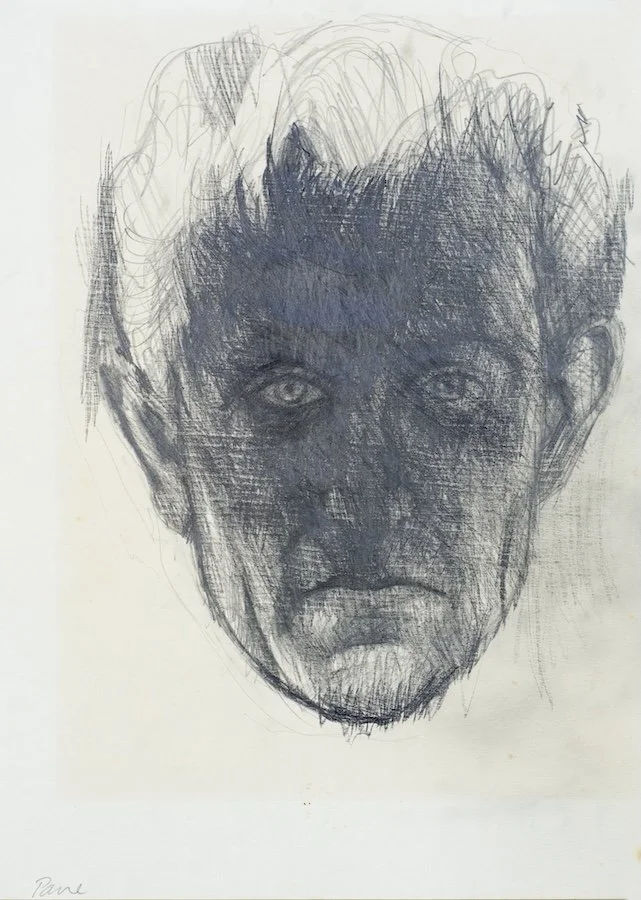
Self Portrait, 1975, pencil on paper, 12 x 9 inches
Paul Harris (1925–2018) continues to evade definition materially, thematically, and aesthetically. Trained as a painter, he worked in oil, pencil, crayon, pastel, lithography, fabric, fiber, wood, and bronze. He was a recipient of a Tamarind Lithography Workshop Fellowship (1969), a Guggenheim Fellowship (1979), and a MacDowell Fellowship (1977). “A postmodernist,” argues curator Leah Triplett in a specially commissioned #PaulHarris100 essay, “who wove wit, playfulness, and illusion into his work…[he] was among a vanguard of artists across the U.S. manipulating fabric, string, and batting.” After early experiments in pencil, string, and papier-mâché, the latter resulting in his inclusion in a show of new sculpture at the Museum of Modern Art, New York in 1959 alongside John Chamberlain (1927–2011) and David Smith (1906–1965), Harris made his reputation with highly experimental fabric and cloth works that he sewed and stuffed in Bolinas in the 1960s and 1970s. The late American critic Robert Pincus-Witten, writing in Artforum in 1967, enthused: “The boy sews like an angel.” He was soon included in groundbreaking sculpture exhibitions at the American Craftsmen’s Council’s Museum of Contemporary Crafts in New York in 1966 (now the Museum of Arts and Design) and the Los Angeles County Museum of Art (LACMA) in 1967. This was followed by well-received solo exhibitions at the San Francisco Museum of Modern Art in 1972 and the Stanford University Museum of Art in Palo Alto, California in 1982 (now the Cantor Arts Center). A restless and versatile innovator, he turned to bronze in the 1960s, which Jessica Holmes, former deputy director of the Calder Foundation, argues, also on the occasion of #PaulHarris100, “from this more muscular, firm matter—so unlike cloth—he was nonetheless able to tease out a parallel eroticism that evidences a profound engagement with form.” A socially and politically progressive human being, Harris was also a beloved teacher who taught for 25 years at California College of Arts and Crafts in Oakland (now California College of the Arts) on the recommendation of his close friend Richard Diebenkorn (1922–1993).
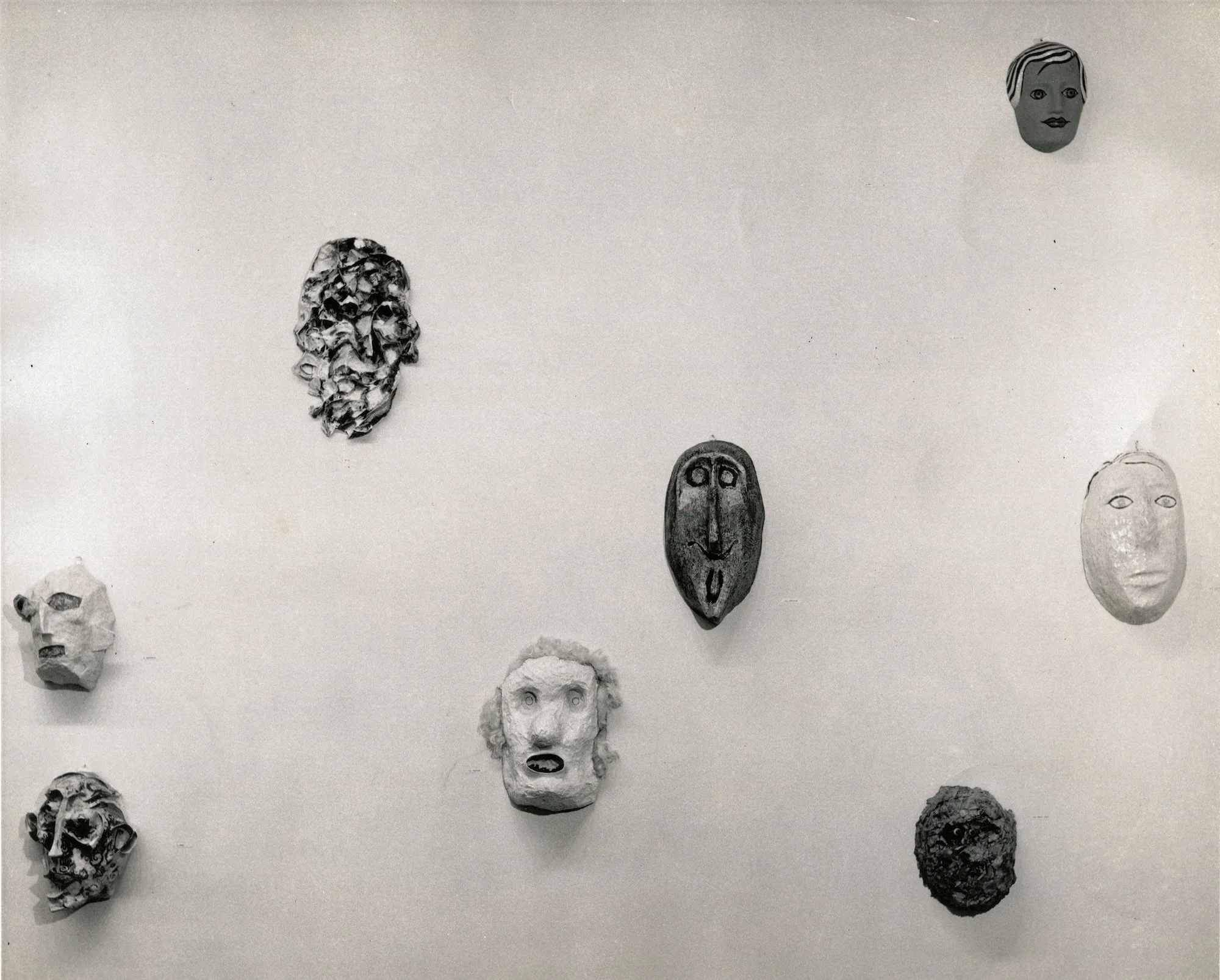
Installation of exhibition Paul Harris, Poindexter Gallery, New York, May 19 – June 6, 1958, Paul Harris Archives
In 1951, Harris received his M.A. in Painting and Sculpture at the University of New Mexico. Previously, as an undergraduate student at the university, his classmates included Agnes Martin (1912–2004) and Diebenkorn, who eventually became “perhaps his closest friend.” By 1952, Harris, married and a new father, moved with his family to Jamaica—“we just wanted to get out of this country as a protest,” he later told a National Public Radio affiliate—where he began teaching at a Quaker school. A scarcity of material motivated Harris to experiment with newspaper, papier-mâché, fiber, and string, resulting in fantastical wall-mounted masks. A selection of these masks, not shown together since the artist’s first solo exhibition in New York City at the legendary Poindexter Gallery in 1960, will be similarly installed in the museum’s main gallery, including the benevolent and vertical Official (1953) and the richly embellished, painted Man Hearing (1954).
An early example of his vividly colored stuffed fabric and cloth sculptures, Woman Giving Her Greeting (1964), begun shortly after the artist and his family moved to Bolinas in 1963 and made with found materials, punctuates the survey. “I couldn’t afford bronze, and I don’t think I had the physical structure for working in stone,” he told an interviewer. “I just had to look around because of the problems of money; and when I came to Bolinas, in a house that we rented, someone had...left some mattresses. And so I stuffed these and made stuffed figures for quite a while that I sewed. It did express something that I needed to say at that point.” Many of Harris’s figures incorporate a chair or seating; this example, on loan from the Fresno Art Museum exclusively for the presentation—and included in the ambitious American Sculpture of the Sixties at LACMA in 1967—is a regal and powerful six-foot production in a hand-sewn, floor-length royal blue gown.
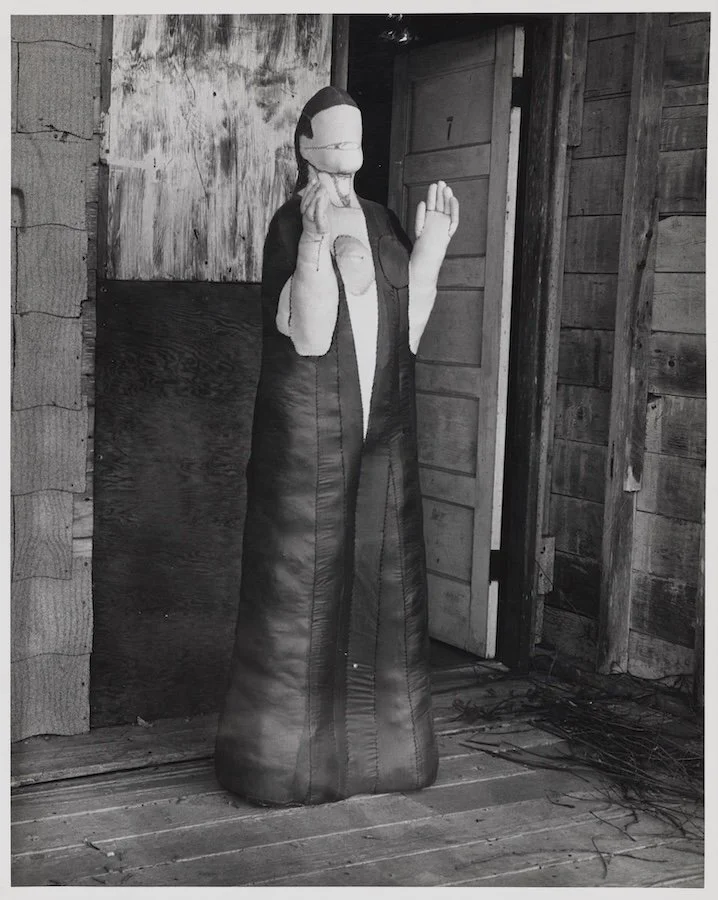
Woman Giving Her Greeting, 1964, cloth on metal, 67 x 21 x 15 1/2 inches, Gift of Christopher and Nicholas Harris, Collection of the Fresno Art Museum
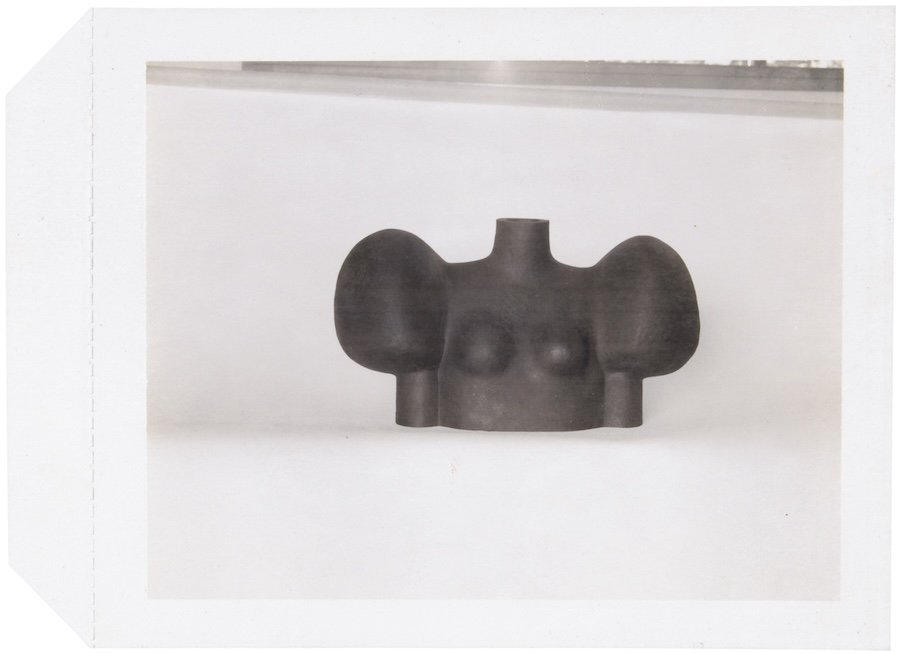
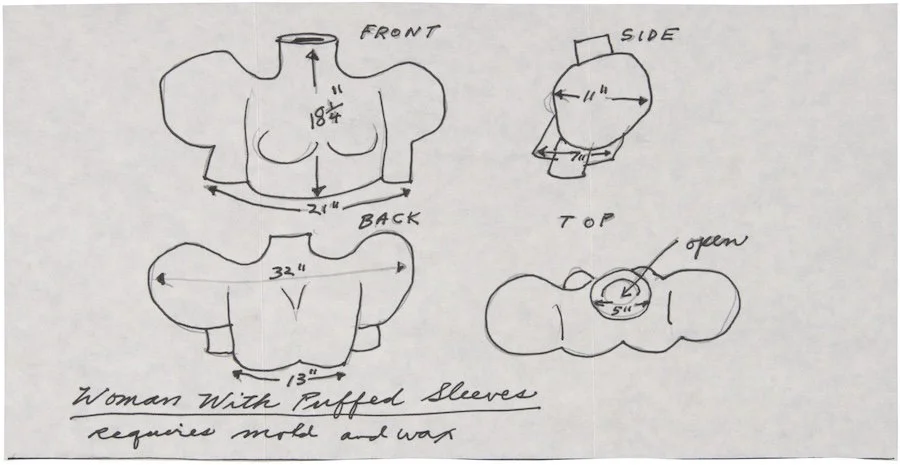
Polaroid and drawings of Woman with Puffed Sleeves, 1992, bronze, 18 x 32 x 14 inches, Paul Harris Archives