Centennial Journal
Art historians, curators, and archivists celebrate #PaulHarris100
Art historians, curators, archivists, students, and enthusiasts are participating in #PaulHarris100, a festive year of new insights and discoveries celebrating the art and life of the restless postmodernist (1925–2018).
At the newly expanded Portland Art Museum, the estate is delighted to announce that Paul Harris: Shut-In Suite,1969–70 is the inaugural exhibition in a new gallery adjacent to the new, striking Mark Rothko Pavillion. Harris made the twenty-one color lithographs during an intensive 90-day fellowship at Tamarind Lithography Workshop in Los Angeles. As we reported recently on @PaulHarrisEstate—the official channel for fresh visuals, critical analysis, new scholarship, untold stories, memories, reflections, and more on the life and work of the late sculptor—Harris worked with legendary Master Printer Serge Lozingot, completing the series in black tusche and crayon.
On the occasion of the centennial, Mary Weaver Chapin, PhD, Senior Curator of Prints & Drawings at the museum, specially prepared a series of wall texts to contextualize the installation. “Twenty lithographs surround you, depicting quotidian objects such as a raincoat or a newspaper. Others offer the briefest suggestions of a passing narrative: a girl on the beach, a cemetery across the street.
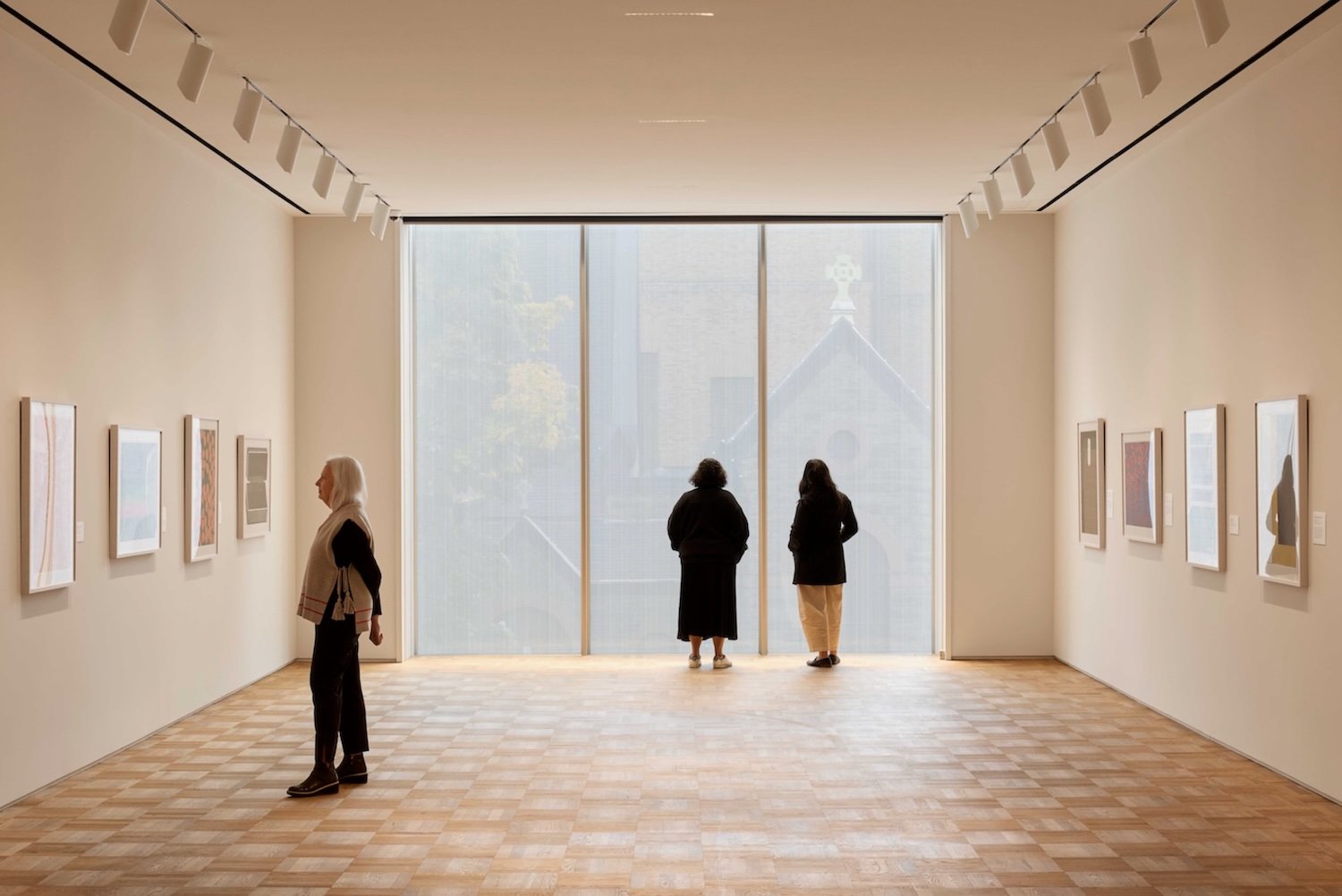
A centennial exhibition, Paul Harris: Shut-In Suite, 1969–70, on view at the new Portland Art Museum, Courtesy of Portland Art Museum, Oregon. Photo: Jeremy Bittermann, 2025
Museums and institutions join #PaulHarris100
From these thin sources, artist Paul Harris constructed a complex series that is alternately playful, meditative, and mysterious,” Chapin writes. “Reduced to his thoughts and immediate surroundings, Harris created tableaux that simultaneously express isolation and the beauty and magic of everyday life. Through dramatic cropping, as in Left a Light On, or extreme close-ups devoid of context, as in Blind, he alters our view of his world. In some prints, the patterns slip into pure abstraction or decoration, and it is only with effort or the help of the title that the viewer can identify the subject. We are rewarded by looking closely—many of the lithographs have hand-cut foil and vinyl additions—as well as from a distance, where they coalesce into a group that is dreamlike and elliptical, suggestive of memory and half-formed stories.” On Thursday, June 4, Chapin will welcome Leah Triplett, Curator of Contemporary Art at the Pennsylvania Academy of Art and a specialist in soft sculpture, to the museum for a wide-ranging talk on the artist as part of the museum’s Art & Conversation series. Triplett was commissioned by the estate to contribute a reappraisal of the artist on occasion of #PaulHarris100. Her sweeping, lyrical essay, “Interior Interests,” now on a special centennial microsite, is a contribution to the study and understanding of the artist who worked on the vanguard of significant 20th century art.
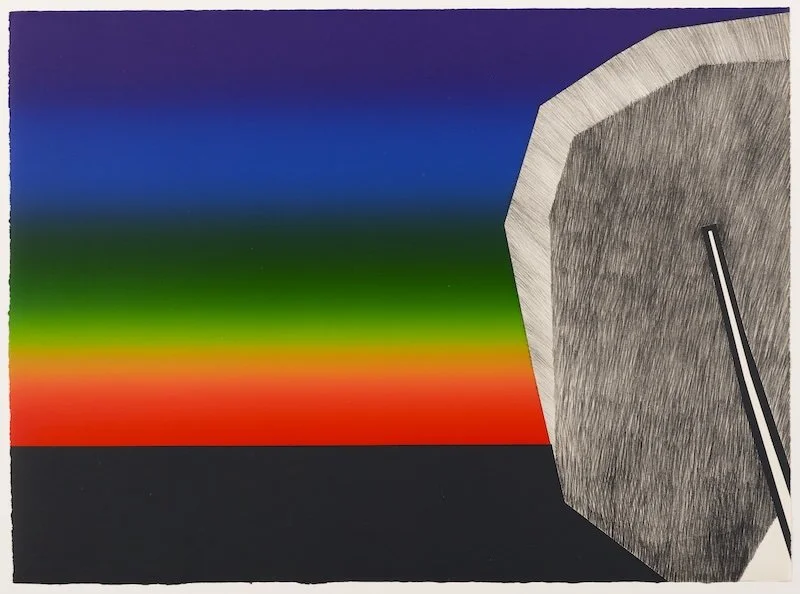
The Girl on the Beach, from the Shut-In Suite, 1969, lithograph on Copperplate Deluxe paper, 30 7/8 x 22 3/4 inches, edition 20
New series @PaulHarrisEstate debuts with a special #PaulHarris100 Collab
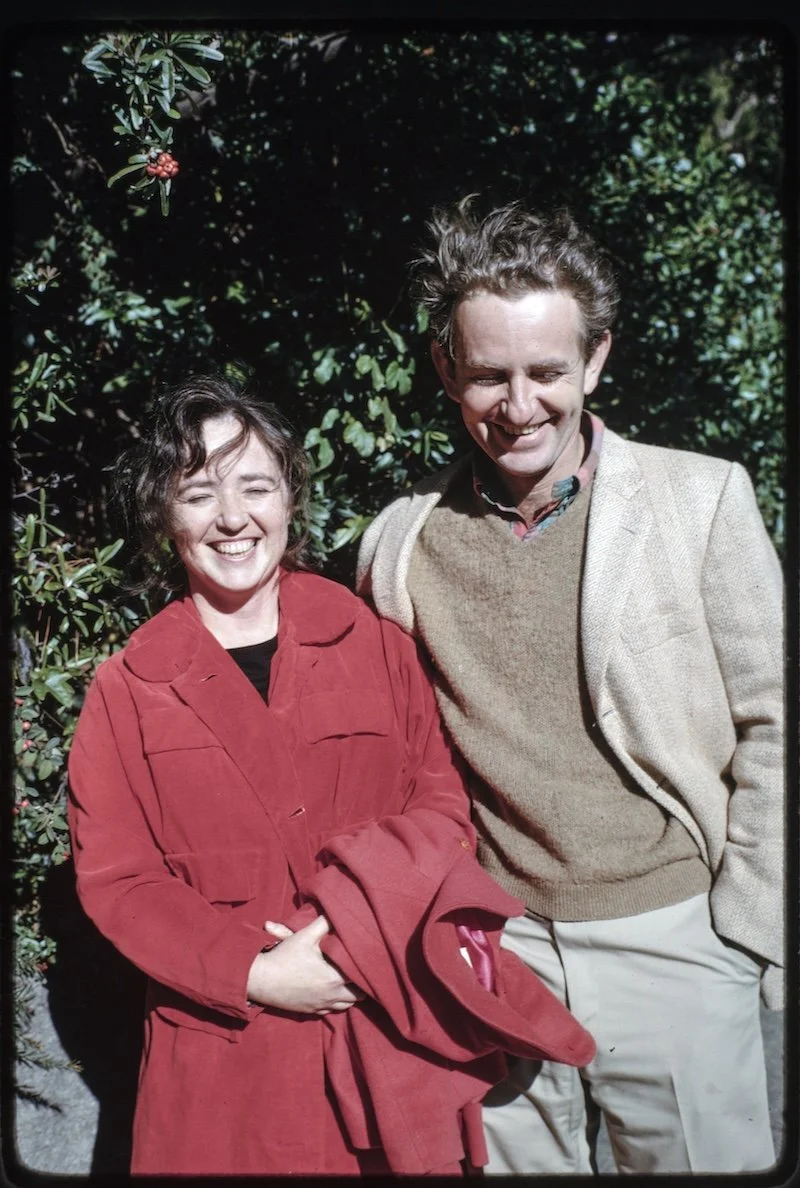
Paul and Marguerite “Meme” Harris outside the Diebenkorn home, Berkeley, Calif., 1966, Richard Diebenkorn Foundation Archives
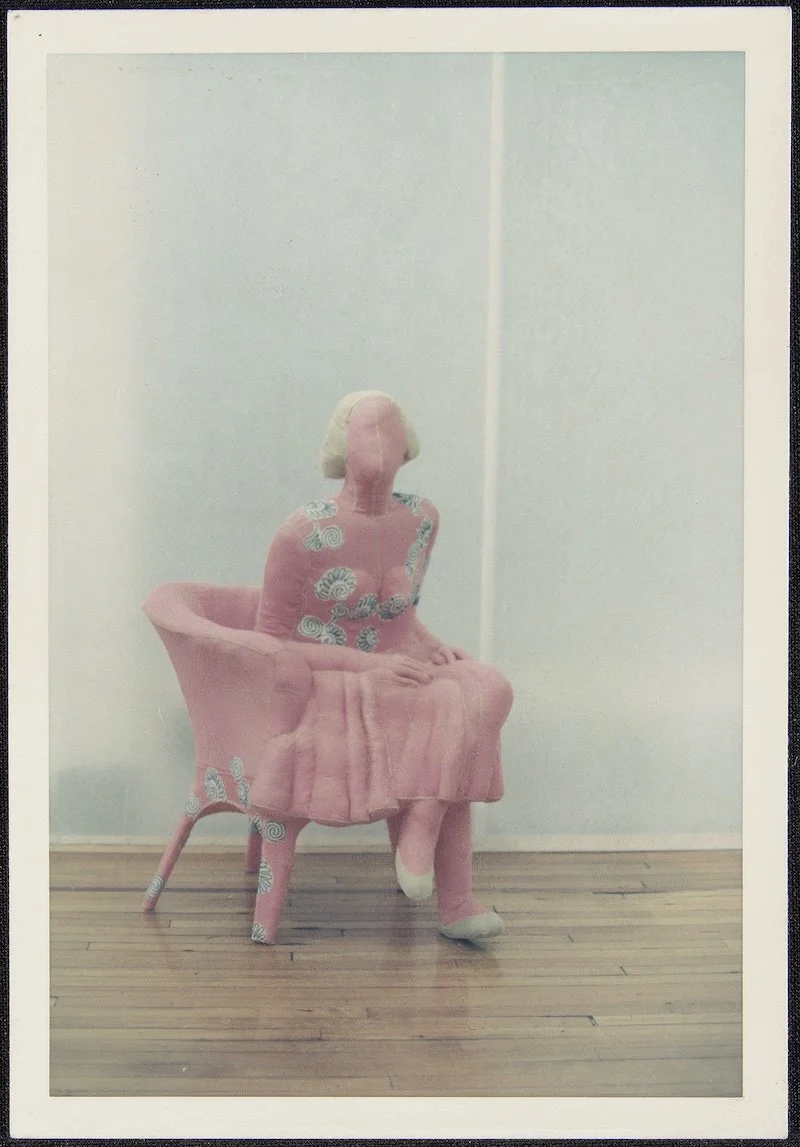
Paul Harris, Woman In Pink Gown, 1964, cloth on wood, 44 x 25 x 32 inches
The estate recently kicked off a new series on Instagram, #ArchivesExchange, and with a special Collab between @PaulHarrisEstate and the popular @DiebenkornFoundation that included an affectionate, revelatory carousel of archival material. Paul and Marguerite “Meme” Harris shared a rich and decades spanning friendship with Richard Diebenkorn (1922–1993) and his wife Phyllis, exchanging quirky letters and travel postcards and swapping drawings and sculptures between their homes. The recent Collab traces the first meeting between the two artists in 1951 in New Mexico to their mutual “love for the French Modernist Henri Matisse (1869–1954),” to 1981, when Phyllis Diebenkorn contributed an essay for Paul Harris Sculpture, Certain Pieces, 1958–1980 at the Loch Haven Art Center (now the Orlando Museum of Art) in which she confesses that “we have lived with many contemporary works of art at different times over the last twenty years, but none have been so insistent on being part of life, on changing the very meaning of our environment, as Paul’s sculpture [Woman In Pink Gown, 1964].” The estate was delighted to share the only known image of the couples together recently discovered in the Paul Harris Archives and shared publicly for the first time on @PaulHarrisEstate and @DiebenkornFoundation.
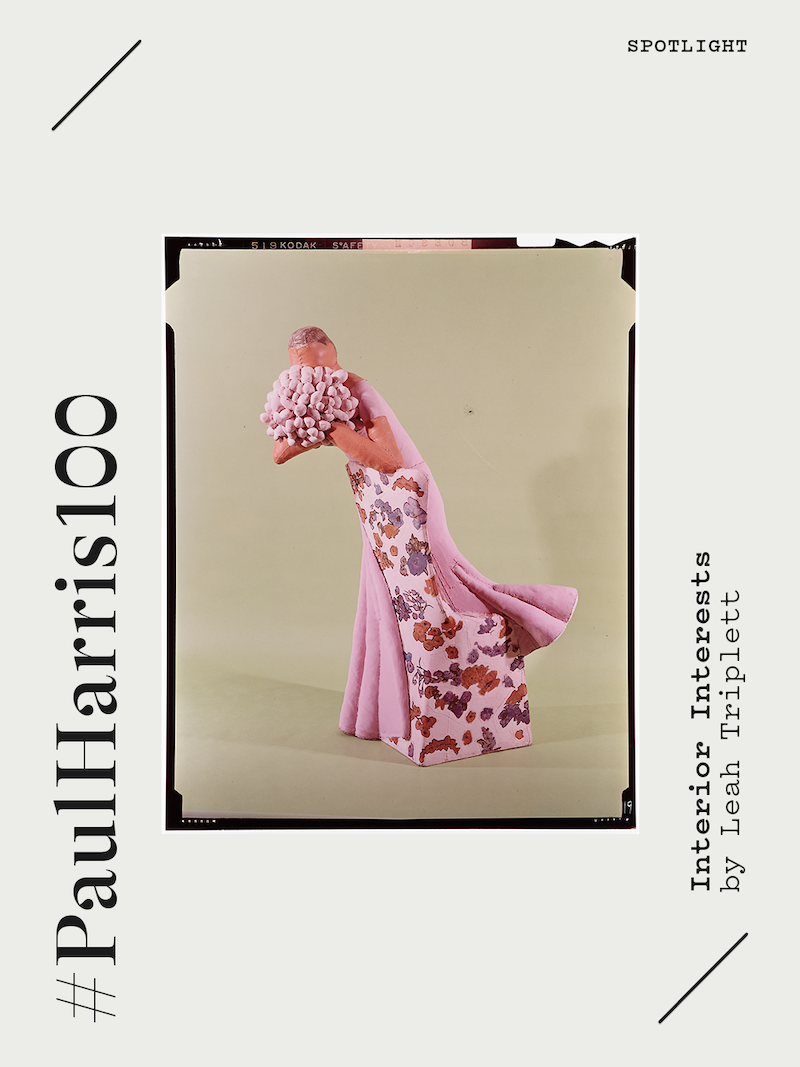
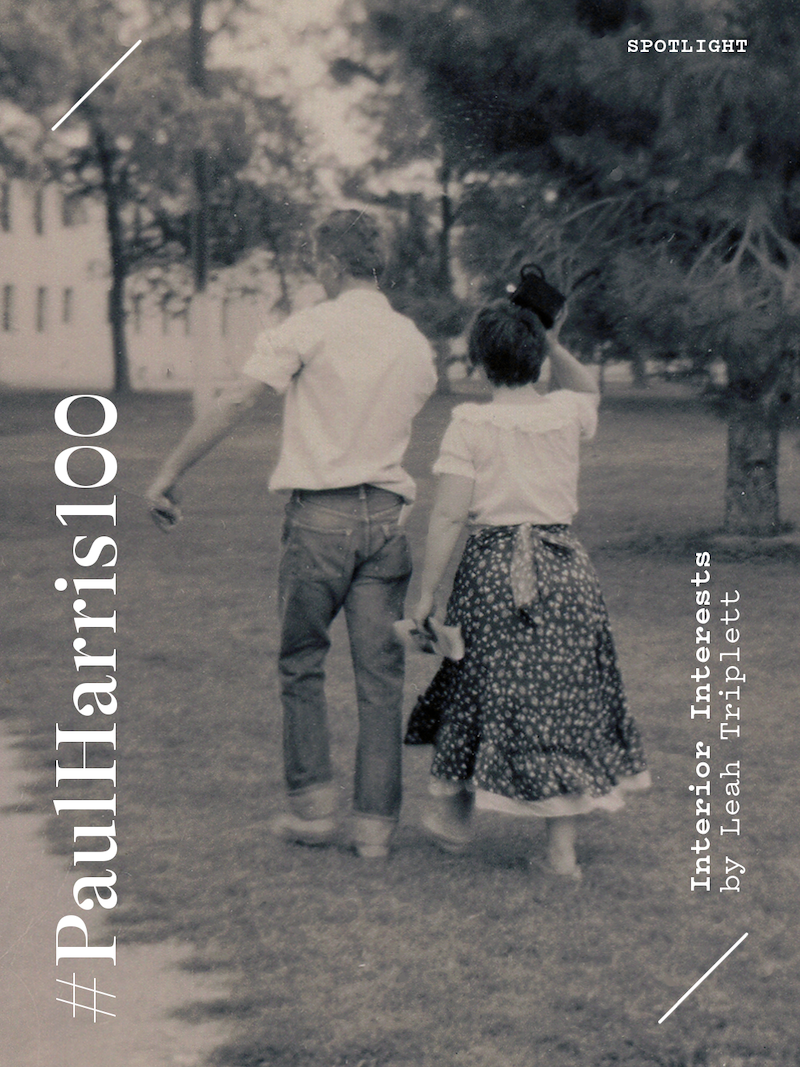
#PaulHarris100 Scholarly Collabs, designed by MacFadden & Thorpe
Fresh scholarship serialized on @PaulHarrisEstate
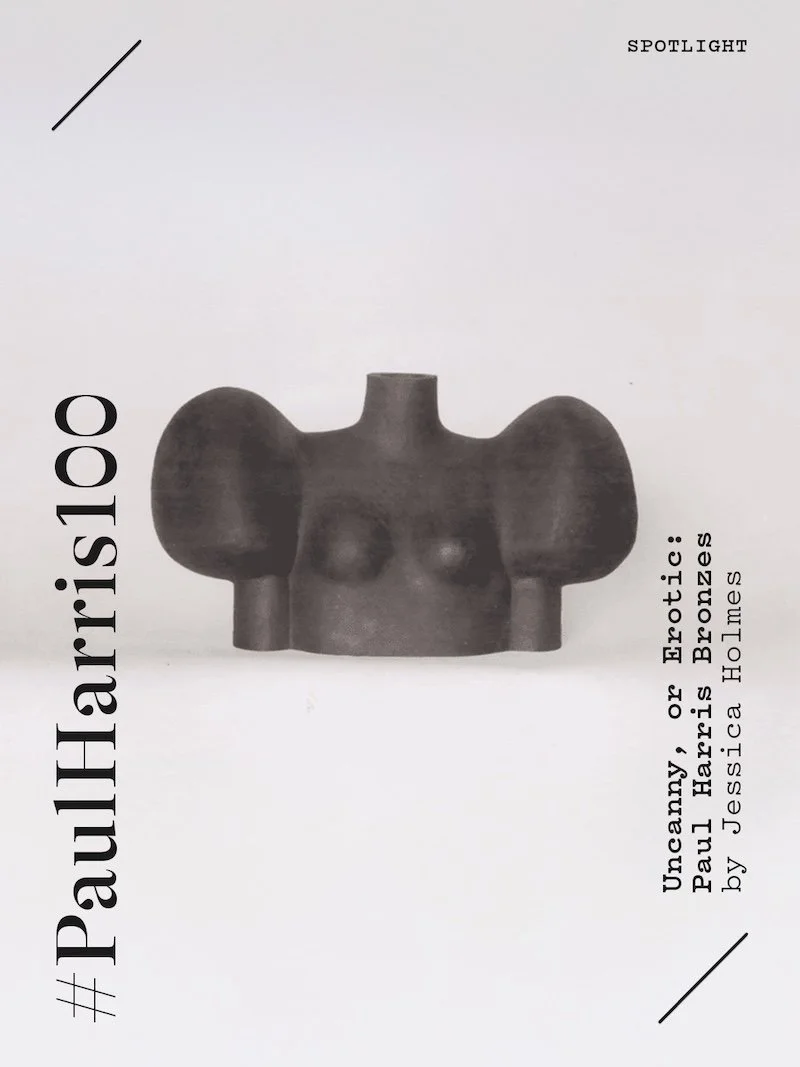
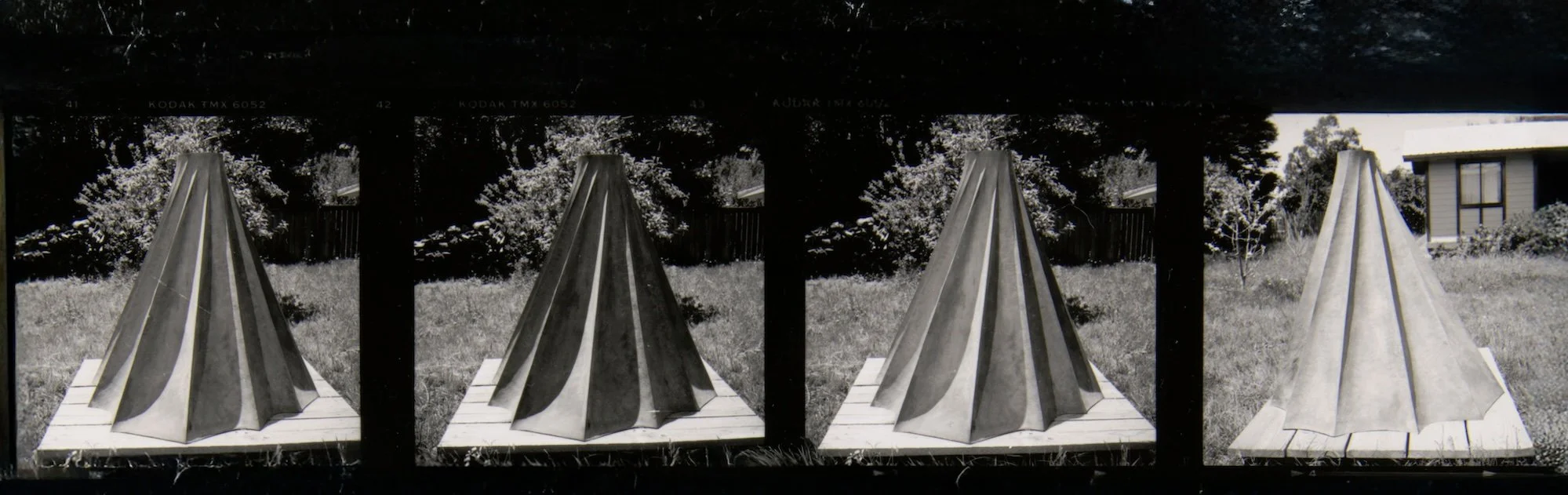
As a centerpiece of #PaulHarris100, an all new visually forward and in-depth centennial microsite boasts freshly commissioned scholarship by art historians and critics. To share the scholars’ new insights, the estate serialized a quartet of essays on @PaulHarrisEstate using rare archival photography and art direction by MacFadden & Thorpe. A tender and youthful photograph of Paul and Meme Harris walking hand in hand and taken in 1950 on the University of New Mexico campus and a striking, newly digitized full-color photograph of Woman Smelling Her Roses (1966) were paired with excerpts of Leah Triplett’s flagship #PaulHarris100 essay. As part of this special series with @Leah_Triplett, followers were treated to her assertion that, although “quintessentially postmodern . . . Harris’s integration of personal narrative in his work, in concert with his stylistic hybridity, effectively estranged him from a postmodernism that extolled essential objecthood, complicating the criticism of his work. Nowhere is this more evident than in his soft and stuffed sculptures, widely exhibited during the 1960s and 1970s; these works presage the Pattern and Decoration movement and foreshadow the synthesis of high and low art forms of the late twentieth century.” And a newly photographed stylized black-and-white Polaroid that the estate recently processed and digitized was art directed to introduce a new essay by Jessica Holmes, former deputy director of the Calder Foundation, who enthuses that “in his bronze sculptures, process was paramount for Harris. He often began with a wax model, a substance that preserved the marks of the artist’s hands when transferred to the alloy. His surfaces in these works thus capture distinct moments in time and retain a remarkable sense of immediacy.” The entire series of new essays is now on the new paulharrisestate.com.